The following are project examples that can be customized at the bachelor's or master's levels. We encourage students to discuss and suggest projects to supervising faculty(faculty, senior research staff and postdocs here >>).
Fireworks inside galaxies, over the last ten billion years
When we look at galaxies as a whole, the birth rate of stars (star formation rate) is happening in a controlled, long lasting fashion. However, when digging inside the internal structure of the galaxies, it appears that there exist pockets of intense star formation triggered either by gas instabilities or by violently merging gas clumps.
Using the most powerful ground based (VLT) and space (Hubble) telescopes in the world, we have managed to “resolve” the star formation activity inside galaxies as far back in time as 10 billion years ago (see Figure). This means that we are now in position not only to measure the total star formation of a distant galaxy, but also to study its demographics/distribution. Along with various other exciting projects facilitated by these state of the art data, a very important task is to identify “fireworks” of star formation inside the body of distant galaxies.
For this task, we are looking for a motivated master student to look into various star formation indicators (e.g. Ha emission line, UV continuum emission) that serve as “clocks”, keeping time of previous and ongoing star formation. By comparing these “clocks” in different areas within distant galaxies we will be able to identify the sites of “fireworks” (intense star formation) and try to investigate the physics behind it. Aside understanding the mechanism of star formation in the early galaxies, the project will also help us to shed some light on the origin of the decline in the star formation history of the universe.
The data for this project, that consist of ~1000 galaxies during the first Giga years after the big bang, are part of the KROSS collaboration including the University of Oxford and the University of Durham among other. The student will have the opportunity to carry out state of the art science and also establish strong collaboration with the institutes involved.
The environment in galaxies can play an important role in their evolution. Indeed, mechanisms such as of inflows, outflows, mergers, and harassment in galaxies can alter galaxy properties such as gas metallicity, gas content, and star formation rate (SFR). Previous studies of cluster galaxies have reached conflicting conclusions: the metallicity/SFR of cluster galaxies have been found to be reduced, comparable, and in some cases even enhanced relative to the metallicity/SFR of field galaxies.
This project will analyze the gas metallicity and SFR for groups and clusters of galaxies using data from the Galaxy And Mass Assembly (GAMA) survey. GAMA is a spectroscopic survey that mapped more than 350,000 galaxies up to a redshift 0.4. One of the main characteristics of GAMA is all the additional multiwavelength information available. Also, GAMA is 2 orders of magnitude deeper than surveys like the SDSS, allowing a better completeness in our sample.
Catalogs of stellar masses, SFRs, metallicities, groups and clusters of galaxies are already available for the development of this project. The student (undergrad or master) will start exploring the data and producing graphs. A draft of a paper for this project is also available, for which depending on the student time and motivation, a first (or co-) author paper can be produced.
Additionally, GAMA members have performed studies to identify galaxies in the extremes environments, such as Voids and Filaments. For which the present project can be easily extended as well to these extreme environments.
Properties of cosmic voids in cosmological simulations
Dark matter in cosmological simulations can be described as a 3D manifold in phase space. Dynamical evolution of this manifold develops folds which correspond to structures of the emerging cosmic web: voids, walls, filaments and haloes. Tracing the evolution of the dark matter manifold is a totally new way of describing cosmic structures in cosmological simulations. In many respects, it is more powerful than traditional techniques based on exploration of the density field. Recent progress in this area shows that the method can be easily implemented in popular N-body cosmological simulation. The main goal of the project will be to study various properties of cosmic voids found with the new method. From the technical point of view, the project will require writing codes for post-processing of N-body cosmological simulations.
The birth of the largest structures of the Universe
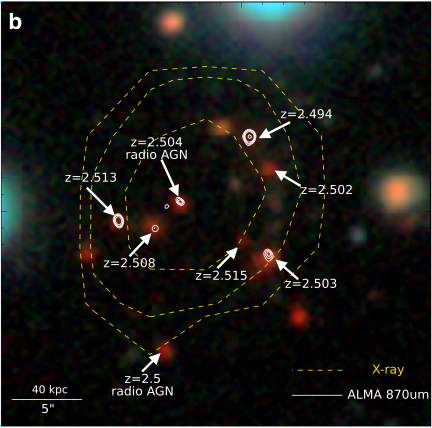
The most distant galaxy cluster known so far at redshift z=2.5, corresponding to ~10.9 billion years ago. This cluster is one of the three targets of the proposed project. All together, the galaxies hosted in the core of this cluster form each year the equivalent of more than 3,500 Suns, a prodigious rate compared to the almost total absence of new stars formed in galaxies in the central regions of present-day clusters. Do young clusters influence their galaxies differently from what they do when they are old?
In the local Universe, galaxies reside in a variety of different environments: they can be isolated systems, live in couples or small groups, or form gigantic gravitationally bounded structures, dubbed Galaxy Clusters. Depending on the surrounding environment, galaxies show different properties: massive, spheroidal, old, red, and dead objects preferentially live in the core of galaxy clusters, while blue, actively star-forming, spiral galaxies tend to form smaller associations or to be isolated. In this sense, the environment has major effects on galaxy evolution.
However, both galaxies and their environments undergo a dramatic change over the last billion years, through multiple and strongly interconnected processes. This poses questions that are still open and hotly debated in the astrophysical community: when did the environment start influencing galaxies? Were the effects similar to the ones we observe today? How and when did the first galaxy clusters form? What are their properties when they are young?
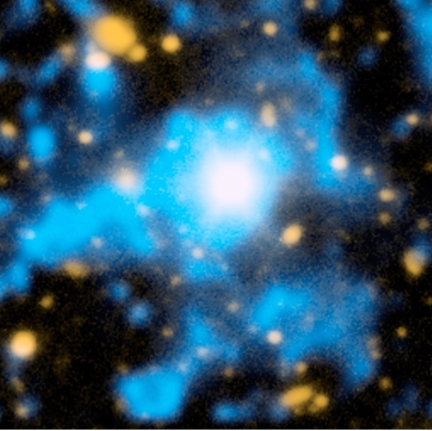
A Giant Lyman-nebula in the distant Universe. These mysterious objects are gigantic (3-30x larger than the Milky Way) and extremely luminous systems made of pure gas, frequently found in proto-cluster environments. How do they form? What is their fate? What is the origin of this incredibly powerful light emission? What is their relation with young clusters?
In this project we propose to study the properties of three (out of the handful) known young and distant galaxy clusters, exploiting new VLT/FORS2 data recently collected by our group. One of the structures is shown in the top panel on the left (Wang+2016). Using both narrow-band photometry and long-slit spectroscopy, we aim at detecting the Lyman-a emission arising from hydrogen gas reservoirs, both in individual galaxies residing in the young clusters, and sitting in the intergalactic space, forming some of the largest and most luminous systems known in the Universe, the so called Giant Lyman-a nebulae (bottom panel on the left, Martin+2015). Studying the properties of the Lyman-a emission, the distribution of the emitting galaxies in the clusters, and the luminosity and size of the diffuse intracluster gas, we will infer if and how the young cluster environments had an early effect on their members already 10 billion years ago, enhancing or suppressing the formation of new stars, the growth of the central supermassive blackholes in galaxies, or heating the gas reservoirs in their surroundings.
We look for a motivated student with strong interest in reducing and analysing both photometric and spectroscopic data from one of the largest and most advanced telescope facilities in the world, the Very Large Telescope in Chile. This project is part of a collaboration with scientists from the Commissariat à l’Énergie Atomique (CEA Saclay) in Paris and several other European institutes. The student will have the opportunity to carry out state of the art science and also establish strong network with the scientists and institutes involved.
Ultraluminous X-ray Sources: from the Local Group to the Very First Galaxies
Binary stellar systems are critical in revealing the nature of compact objects. Black holes especially, reveal themselves only when they are member of an X-ray binary (XRB). XRBs are mass-transferring binary systems composed of a compact object accretor and a donor star. They emit radiation in X- rays, when mass is transferred from the donor star onto the accreting compact object. Observational studies of the statistical properties of XRB population in the local Universe show that their total energy output is dominated by the relatively few, most luminous XRBs, also known as ultraluminous X-ray sources (ULXs). ULXs have been suggested to not only play a crucial role in shaping the thermal evolution of the early universe, but also regulating, through their radiative and mechanical energy output, star-formation in dwarf galaxies and massive stellar clusters. As part of this project, we will develop synthetic ULX population models where the crucial ULX phase will be model through detailed binary evolution calculations, avoiding the simplifications of traditional modeling tools, and compare them to the local observed ULX sample.
Ultraluminous X-ray sources as progenitors of gravitational wave sources
In one of the main proposed formation channels of coalescing binary compact objects, prior to the formation of the second compact object, the binary is expected to go through an ultraluminous X-ray source (ULX) phase. ULXs are a subpopulation of X-ray binaries that population the very high-end of their luminosity distribution. Since ULXs are potential observable progenitor systems of coalescing binary compact objects, the statistical properties of ULX populations and their occurrence rates can be used as a way to distinguish between the different formation channels of binary compact objects. However, one should keep in mind that only a fraction of ULXs will eventually result in a coalescing binary compact object, as some observed ULXs might even be low-mass X-ray binaries. Hence, the observed rate of ULXs by itself cannot pose a robust constraint in the formation rate of coalescing binary COs. As part of this project, we will develop synthetic ULX population models and identify those that are potential progenitors of of coalescing compact objects. Their relative occurrence rates, compared with observational samples of ULXs and GW sources, will allow us to pose constraints on the various proposed formations channels.
When an unlucky star gets too close to a supermassive black hole, the tidal force from the black hole can deform or even totally destroy the star. This is called a tidal disruption event. The firework illuminates a previously dormant supermassive black hole for about a year. This allows astronomers a chance to detect and understand such black holes which cannot be observed otherwise. This project is for students who are interested in using theoretical modeling to answer fundamental questions like: How do we use tidal disruption events to study the demographics (mass, spin, etc) of supermassive black holes in quiescent galaxies? How is general relativity playing a role in determining the observables? How do accretion disks and jets form under the extreme conditions in a tidal disruption event? The student can also have a chance to get involved in tidal disruption event observations through collaboration with Giorgos Leloudas.
2) General relativistic simulations of extreme accretion around black holes
For hundreds of years it is believed that there is a fundamental limit on how fast black holes can digest gas and emit radiation, which is called the Eddington limit. Recently, there are observational evidences that this limit can be broken under extreme conditions such as in a tidal disruption event (a star eaten by a black hole) or for seeds of supermassive black holes in the early universe. I use a comprehensive code (involving general relativity, magnetic fields, gas hydrodynamics, radiation) to study such super-Eddington accretion. The purpose of this project is for the student to learn this code or help analyze the results, in order to understand how black holes can accrete gas so fast and produce the most luminous flares and powerful jets and winds. It is preferred that the students have good computational skills or are very interesting in coding.
When we compute how much star formation has happened in galaxies during the lifetime of the universe we can also calculate how much mass of heavy elements has been synthesized in supernova explosions. However, comparing this computation with real observations of the galactic, extragalactic and intergalactic material, we can only account for about 10% of the mass of metals. So where are the rest of the metals hiding? Maybe if we look at some specifically selected quasars in order to investigate the outskirts of galaxies will we be able to find some of these ‘missing metals’.
Observational studies of tidal disruption of stars with ePESSTO
When an unlucky star gets too close to a supermassive black hole, the tidal force from the black hole can deform or even totally destroy the star. This is called a tidal disruption event (TDE). Despite the fact that this phenomenon was already predicted almost 30 years ago, research on TDEs is currently experiencing a boom, mainly due to the recent discovery and follow-up of many such events. This project will use observational data of TDEs, mainly obtained through the ePESSTO survey, to address fundamental questions for the physics of these events, such as the mass and the nature of the disrupted star and the properties of the black hole and the accretion disk surrounding it. To this end, the student will be trained in the analysis and interpretation of data obtained both by ground- and space-based telescopes and will gain experience and skills that are very useful both within many fields of astrophysics and outside. The student can also have a chance to get involved in theoretical studies of TDEs through collaboration with Jane Dai.
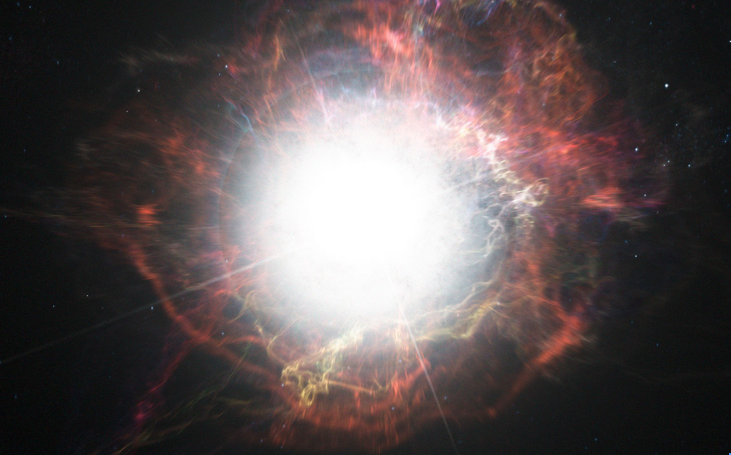
Supernovae are powerful explosions, marking the ends of the lives of stars but also the beginning of life itself, through the release of their heavy elements of which stars and planets are made, including us humans. There are many different kinds of stars and thus, there are also many different kinds of supernovae. Based on their observational signatures, supernovae have been categorised, making it easier to establish their origin, understanding the physical mechanism of their explosions and to make them usable for other astrophysical problems.
For a few weeks to months, the ejecta (which contains the elements) is very hot and dense, but as it expands, it is cooling. When it has reached the right temperatures and densities, some of the ejected elements condense out of the gas into solids, and form so called dust grains. The questions here are: How much dust can form in a supernova? What is the composition of the dust?
Typically, the hot and warm dust emits at wavelengths longer than 1 micron. Here, you will have spectra of a supernovae taken at different epochs after explosion. These spectra cover a wavelength range from 0.3 to 2.5 micron. You will have to fit one black body function to find out the temperature and radius of the supernova photosphere and simultaneously, you will fit a modified black body function to the near infrared emission. The modified black body function contains the dust properties. You can fit different dust species with different grain properties. From the best fitting model you can find out how much dust has formed and at what temperature. You may also find out the composition of the dust.
Requirements: It would be good if you are familiar with some programming: e.g., IDL, python, Matlab etc.
Stellar magnetic activity and its effect on exoplanets and their detection
The magnetic activity of cool stars in the form of flares, winds and coronal mass ejections have a direct impact on surrounding planets. This activity varies with the mass, age and rotation rate of the star and can be hazardous for the creation and development of life and is therefore of potential importance for habitability. If you are interested in the effects stars have on planets, and also on the detection of exoplanets, here are few topics that might be for you:
1) Hunting for stellar coronal mass ejections
Coronal mass ejections (CMEs) are explosive events that occur basically daily on the Sun. It is thought that these events play a crucial role in the angular momentum loss of late-type stars, and also shape the environment in which planets form and live. So, far only a handful of CMEs have been detected in other stars than the Sun. In this project you will hunt for CMEs in data sets, which have not previously been analysed for CMEs. This project can be fine-tuned to fit either Bachelor or Master thesis time frame. Project requires some programming skills and basic knowledge of IRAF.
2) Habitability of planets around low mass stars
M dwarfs are small, low luminosity stars, which are the most abundant stars in our Galaxy. The fainter and less massive the star, the easier planets are detected around them. In addition, since low-mass stars are less luminous than the Sun-like stars, the habitable zone is much closer to an M-dwarf host, making a 'Goldilock’s Planet' that is just right for life easier to detect. But these stars are also magnetically very active. For the first few gigayears they have numerous flares and coronal mass ejections, which can have serious consequences to the atmospheres of orbiting planets - even possibly completely erode them away. This raises serious questions on the habitability of planets around M dwarfs, even if they are in principle located in the habitable zone. The aim of this project is to study the effect of numerous CMEs on exoplanets orbiting in the habitable zone of an M dwarf. This project is mainly aimed as a Bachelor thesis topic, but it can also be extended to a Master thesis.
3) Detection of small exoplanets
The detection of exoplanets using any method is prone to confusion due to the intrinsic variability of the host star. In this project you will apply recently developed methods to study the detectability of small planets, and especially the case of alpha Centauri B planet, which could be a spurious detection due to stellar activity. Mainly a Bachelor thesis topic, but other related projects can be also given for Master thesis. Project requires some programming skills.
Galaxies, Quasars and Transients at high redshifts
I am overall interested in exploring the distant Universe (lookback times of 8-13 Gyr) through a range of methods such as quasar absorption line systems, emission line galaxies or cosmic explosions like gamma-ray bursts. Of particular interest to me is the chemical evolution of the interstellar matter in galaxies, i.e. the gradual increase in the amount of heavy elements formed by previous generations of starts. If you are interested in similar questions you are welcome to come by and discuss possible master thesis projects.
Absorption lines seen in Quasar or Gamma-ray burst afterglow spectra can be used to explore the high-redshift universe through metal-absorption lines that arise in randomly intersected intervening galaxies. By combining absorption-line studies with the characteristics of the galaxies that give rise to them, we can examine galaxy outskirts and halos. The gas comes from out-flowing galactic winds, filamentary accretion, or in tidal debris, and cannot be detected in emission. Various projects are offered to explore the connection between metal-enriched galaxy halos with the host galaxies in order to get a coherent picture of galaxy formation in emission and absorption.
Finding star-forming galaxies in the distant universe has primarily relied on deep images and colour selection to identify the galaxies. Recent observations have found a population of galaxies that have more unusual characteristics in the form of extremely strong emission lines. Such lines may arise in the first star-burst event in the galaxies. This project will use data from the Very Large Telescope to locate these types of galaxies and explore their nature and their role in building up galaxies with cosmic time.
Cosmic dust is the dominant form of solid matter in the universe and radiates half of the non-primordial radiation in the universe, is vital for forming virtually all molecules, stars and planets. But we don't know where it comes from or what its detailed properties are. It should not exist in the early universe, but it does.
1) We investigate the origin of cosmic dust by: - Looking at the dust masses in very metal-poor galaxies in the local universe to determine how dust forms in environments like the early universe. - The effects of formation and destruction of dust in nearby supernova remnants - The existing project on dust extinction curves is still valid.
2) X-rays from Gamma-ray burst explosions (more or less the same project as before), involving: - X-raying the gas surrounding the burst to determine what it is and the binarity and mass of the progenitor star. Includes computational modelling of the dynamic ionisation of the gas surrounding the burst - Looking for signatures of rotation or line emission from the massive star explosions in the X-ray afterglows of GRBs
3) Intensity Interferometry (II) is a method to achieve extremely high resolution imaging through the earth's atmosphere using quantum optics: - Look at the practicality of II using large, mass-produced optics
4) Spectral variability in quasars and other AGN provides information on the structure of the regions around AGN, this is called reverberation mapping. Currently, the code used to extract specific information is sub-optimal: - Code better reverberation mapping software to maximise information extraction from variability information.
A key disconnect between theory and observation of evolving galaxies at high redshift is that we observe luminous things (a fraction of the baryons) in a galaxy, yet the theory of galactic assembly makes predictions nearly exclusively about the dark matter which dominates the mass in the galactic halo. At low redshift, there are scaling relations between the halo mass and observable quantities such as stellar mass. Using these relations produces a consistent result out to z~4-5, but at z>5 yields a shocking result: it appears that massive galaxies assemble so early that they exist even before gravity has brought their components together! This, of course, is impossible... So, what's gone wrong? Discovering that some exotic new force that assembles galaxies more quickly is required would be a tantalizing conclusion, but is hardly the only possible answer. A few different projects would be possible looking at different explanations that would be less exotic, with the goal of either finding a good solution or ruling out everything more mundane. Given the effort necessary to examine one of these carefully, each would be a different possible project.
1) High-redshift galaxies are studied nearly exclusively by fitting a small number of measurements encompassing broad spectral bands with templates derived from lower-redshift galaxies. Thus, we make the strong assumption that high-redshift galaxies look very similar to low-redshift galaxies. So far, this assumption has proven valid when later observations have been able to measure high-resolution spectra, but at some point this assumption must break down. We would investigate how different the physics of galactic dynamics and star formation would need to be at high-redshift in order for their masses to be overestimated enough via this process of photometric template fititng that correcting them resolves the problem.
2) If we have indeed overestimated the masses, a likely candidate would be that the stellar initial mass function (when a batch of stars is made, its distribution of masses) has changed at high redshift. There would need to be a greater fraction of high-mass stars at z~6-10 than at z<4. Several long period, high-redshift surveys offer the possibility of testing this possibility directly by searching for superluminous superovae at very high redshift. This is one of the few problems in astronomy that is slightly helped by the high redshift, as despite these supernovae being fainter, relativistic time dilation means that the variability takes place over about a year.
3) Another approach to this seeming disconnect between observation and theory would be that of "abundance matching", in which we simply assert that both theoretical halo mass distributions and all observed galaxy properties are correct, and then use that to match galaxies with halos. For impossibly early galaxies, this would mean that at redshift 0-4 the stellar mass is approximately a constant fraction of the halo mass, and at higher redshifts a greater and greater fraction of the mass of a halo ends up in stars. Our goal would be to detail the parameters of this model and to determine whether we can naturally turn it into a more complete theory or whether such a theory would require its own set of exotic astrophysics.
4) A completely independent possibly approach comes from using the thermal Sunyaev-Zel'dovich effect to look more directly for galaxy halos in observations of the cosmic microwave background. This is sensitive to the entire number of electrons in a galaxy rather than just to those in stars, and gives us a nearly direct measurement of the halo mass. It is also one of the few problems in astronomy that gets easier at high redshift. If theoretical models of galaxy assembly are correct, high-redshift galaxies will not be massive enough for us to find a signal. However, if these "impossibly early galaxies" are indeed as massive as we have inferred from template fitting, targeted followup observations of ~10 high-redshift, high-mass galaxies should produce a composite signal. A small overlap between high-resolution CMB observations and ultradeep galaxy surveys already exists and might be enough to perform this test. If not, we would then propose for targeted high-resolution CMB observations in order to find out the answer.
Many different ways of observing galaxies at a variety of stages in their evolution reach the same surprising conclusion: evolving galaxies all look remarkably similar. For example, almost all star-forming galaxies lie on a tight relation between redshift, the existing stellar mass, and their new star-formation rate. Thus, we can predict the star-formation rate quite well from time and mass alone, without having to know anything about the age of the galaxy, its environment, its morphology, or any of the other things that might seem like they should be important. Two projects that could arise from research in this area might be:
1) This similarly should prompt us to try and build a model in which galaxies share a common evolutionary history, and the various stages that we observe (star formation, quasar accretion, eventual turnoff, etc.) are all included. In this case, the problem suffers from a wealth of data -- there is so much information out there about so many different states of galaxy evolution that it's difficult to make sense of it all. Thus, the initial stages of this investigation will likely involve taking some time to become familiar with the enormous literature on what we've learned in the past few decades about how galaxies grow.
2) Even if we cannot figure out exactly what that common history is, we might be able to use pieces of it to build indicators of galactic maturity. If we can do so successfully, it would allow new insights into several of the most important questions in galaxy evolution. For example, we know that today there are tight relationships between properties of central supermassive black holes and of their host galaxies. We would like to see how these relationships evolve over time, but of course we only ever get to see any one galaxy at one time in its history. Studies often try and investigate this using observations of galaxies at different redshifts, but often at the same stage of their evolution. If we had a good maturity indicator, it would provide a much better way of determining whether supermassive black holes and their host galaxies truly co-evolve or whether a more complex behavior has been masked by observational selection.
Spectroscopy of the most distant galaxy clusters in the Universe
Galaxy clusters are the largest bound structures in the Universe, and are believed to form in its highest density peaks, which is also where the first galaxies form. In the local Universe, galaxies in clusters are observed to be older and more evolved than galaxies in lower density regions. Old evolved galaxies in clusters have been spectroscopically confirmed out to a redshift of 1.3. Beyond that redshift, spectroscopic confirmation of evolved galaxies have to be done in the Near Infrared, as the spectral features are redshifted out of the optical. Several examples of "proto-cluster" candidates are known out to redshifts of z~5, but spectroscopic confirmation old evolved galaxies in these have yet to been achieved. Finding such galaxies is essential to testing our hypothesis that galaxies form first in dense environment. Using recently obtained Near Infrared spectroscopic observations from the Hubble Space Telescope and the Japanese 8m Subaru telescope, the project aims at, for the first time, spectroscopically confirm old evolved galaxies in proto clusters at a record redshift of z~2, and investigate if these have different properties, than galaxies in lower density environments at similar redshifts.
The build up of galaxies over the last 12 billion years
CANDLES: the largest deep survey of the structure and morphology of galaxies over the last 12 Billion years, is currently being undertaken with the Hubble Space Telescope. Large amounts of exquisite data is publicly available, which allows us to study the evolution of the structure of galaxies from their formation in the early universe to the present. The project goal is to retrieve this data, and fit the surface brightness distributions of galaxies, to build a catalog of galaxy shapes and sizes as a function of cosmic time. This catalog will be a treasure trove for studying how galaxies build up their mass and shape from their formation to today.
Quasars are powered by supermassive black holes and reside in centers of distant galaxies. The quasar phenomenon is thought to be an early evolutionary phase of galaxies during which stars are forming and the black hole becomes active as it accretes matter. The aim of this project is to trace the chemical evolution in quasars using the FeII and MgII (alpha-element) abundances. FeII is thought to be produced in stars that take about 1 Gyr to mature to the point where significant iron is produced, while MgII is thought to be produced by supernovae with shortlived progenitors. As a result we can use the FeII/MgII line ratio as a cosmic clock to trace the build-up of chemical elements in these interesting, early evolutionary stages of galaxies. We will look at how this ratio changes with age of the universe by measuring these line ratios in spectra of quasars from the Sloan Digital Sky Survey. We will discuss the implications for our understanding of galaxy evolution. Light to moderate programming is involved. (15 - 60 ETCS)
How well does the FeII/MgII ratio reflect the metallicities in quasars?
Quasars are powered by supermassive black holes and reside in centers of distant galaxies. The quasar phenomenon is thought to be an early evolutionary phase of galaxies during which stars are forming and the black hole becomes active as it accretes matter. FeII is thought to be produced in stars that take about 1 Gyr to mature to the point where significant iron is produced, while MgII is thought to be produced by supernovae with shortlived progenitors. As a result we can use the FeII/MgII line ratio as a cosmic clock to trace the build-up of chemical elements in these interesting, early evolutionary stages of galaxies. The aim of this project is to trace the chemical evolution in quasars using the FeII and MgII (alpha-element) abundances and compare this ratio with other metallicity indicators, especially various ratios of the Nitrogen, Carbon, and Helium lines, in order to test how good a metallicity measure the FeII/MgII ratio really is. We will look at how the FeII/MgII ratio changes with age of the universe by measuring these line ratios in spectra of quasars from the Sloan Digital Sky Survey. In addition, we will measure the Nitrogen, Carbon, and Helium lines in order to perform the above-mentioned test of the FeII/MgII line ratio. We will also compare and calibrate this line ratio measure to the alternative metallicity measures. The results will be discussed in the light of current galaxy evolutionary scenarios and the implications for cosmology and our understanding of galaxy evolution will also be addressed. This project will involve some programming in order to allow a timely conclusion of the project. (15 - 60 ETCS)
Determining black hole masses of high redshift quasars
Astronomers are rutinely using spectral measurements to estimate the mass of the central supermassive black hole in order to study black hole growth across cosmic history. Specifically, measures of the gas velocities and the distances of the gas from the black hole are estimated and the virial theorem is applied. However, for some type sources and lower quality data the line width measure FWHM is more uncertain. We will take a closer look at this method by expanding the ways in which the gas velocities are measured in order to investigate if there are more robust gas velocity measures that can be used. In addition, we will investigate the implications of taking into account the effects of radiation pressure on the gas clouds that are used for the black hole mass estimates using published relationships. This project involves some programming. (15 - 60 ETCS)
Host galaxies of quasars and active galactic nuclei and relationship to the active black hole
We will use archival images in the optical and infrared of nearby active galactic nuclei and more distant quasars to detect and study their host galaxies. The aim is first to characterize best possible the stellar populations. Thereafter the project can engage in analysis of whether the stellar ages relate to morphological signatures of a potential recent merger or galaxy interaction. Other options are to relate the stellar properties extracted from the imaging with information extracted from spectroscopy so to test how well those two methods trace one another. One option is also to compare the galaxy and stellar properties with estimates of the black hole mass using our own measurements based on spectral analysis. The length of the project determines the amount of data that we'll look at and the depth and scope of the discussion. (15 - 60 ETCS)
Estimating the mass of actively accreting black holes in nearby and distant active galactic nuclei and quasars and studing the black hole mass relationship with quasar properties
Quasars are powered by supermassive black holes and reside in centers of distant galaxies. We will use spectroscopic data from the Sloan Digital Sky Survey to estimate the mass of the central supermassive black hole that powers active galactic nuclei and quasars. We will extract spectral parameters that characterize the quasar properties (governed by the black hole accretion physics and physics of the central gaseous region) and study how these properties vary with black hole mass. One option is to investigate ways to improve on the black hole mass estimates. We can complement our spectroscopic study with SDSS and HST imaging and also study how quasar properties or black hole mass relates to the host galaxy properties. The length of the project determines the amount and type of data that we'll look at and the depth and scope of the discussion (15 - 60 ETCS).
We don’t know which particle is the dark matter, but we want to try to measure its scattering cross section. By looking at X-ray emitting gas in galaxy clusters, we can extract a property of the dark matter particles called the “velocity anisotropy”. If this turns out to be different from zero, then the scattering cross section of the dark matter particle cannot be big.
Requirements, computational and analytical skills.
Dark Energy is believed to accelerate the expansion of the Universe. However, the acceleration is almost always measured using supernovae. We want to invent a new method, which does not use “luminosity”, but instead uses “a yard-stick on the sky”. The technique is being developed at DARK these years, and includes finding huge pancakes on the sky.
Requirements, computational and analytical skills.
Physical parametrization of cosmic dust extinction laws
Cosmic dust is ubiquitous in the Universe and distorts our view of distant objects. For example, the interpretation of the light curves of high-redshift supernovae used to infer the existence of dark energy critically depends on correction for dimming by dust. The standard 'extinction law' is based on observations of stars in the Milky Way and is purely empirical. This project aims to derive a new parametrization of the extinction law based on (1) devising a new physical parametrization of the Milky Way extinction law and (2) extending the law to other galaxies and higher redshift. The new law will be used to address the nature of the famous 2175 Å feature and the consequences for what we can infer from dark energy based on distant supernovae.
Selection bias in academic positions (and other areas)
There are very few female lecturers and professors at NBI and in the natural or technical sciences in general. This is despite a recruiting pool of about 30 % women at the PhD level. The dramatic decrease in female scientists as a function of seniority is known as the 'leaking pipeline'. The effect is sometimes attributed to a combination of women's lack of competitiveness and personal choice as they get kids and prioritize differently. However, a recent study (Watson, Andersen & Hjorth, Nature 436, 174, 2005) shows exactly the same effect occurring over just a few months resulting from small biases in a series of selections of applicants for the European Young Investigator Awards. The purpose of this project is to create a physical model capturing the main effects of a multidimensional set of skills required for selection, a suitable dispersion in these, small selection biases leading to a leaking pipeline. Armed with this model one can address the causes of gender bias in academia, business, and government.
Physical properties of galaxies hosting gamma-ray bursts
Gamma-ray bursts occur in violently star-forming galaxies, generally at high redshift. Such galaxies can be used to map the star formation in the universe and the fundamental routes to galaxy formation and build-up. This project aims to exploit a huge data set of GRB host galaxies gathered in Copenhagen, the most comprehensive and statistically available worldwide. Scientific questions that can be addressed are: What is the redshift distribution of GRBs and how does this relate to the star formation history of the universe? What is the fraction of obscured star formation in the universe? What is the relation between GRB host galaxies and other populations of high-redshift galaxies such as Lyman-alpha emitters and Lyman break galaxies? What are the ages and dust content of individual galaxies?
Dark energy equation of state, dark matter distribution, and galaxies at the end of the dark ages as probed by massive clusters of galaxies
Massive clusters of galaxies at intermediate redshifts act as gravitational lenses of background galaxies. The locations of the multiply imaged arcs depend on the dark-matter distribution in the cluster and the cosmological parameters, notably the matter and dark-energy density parameters. Ideally, an extremely deep Hubble Space Telescope image of the most spectacular cluster lens can constrain both at unprecedented accuracy. The project will involve modeling of HST and Chandra X-ray observatory, and VLT/X-shooter data on massive clusters.
Bibliometrics and other quantitative measures of scientific quality: caveats and new ideas
Quantifying scientific productivity (quality, quantity, impact, etc.) is becoming more and more important. A relatively new academic discipline "scienometrics" is gaining momentum while politicians and science administrators are implementing various measures supposed to be 'simple' and operation, e.g., for distributing funding. This project aims to study current ideas in the field and will address the issue from both the scienometrics point of view and the administrator point of view. The purpose of the project is to help define useful criteria and measures and at the same time help scientists define their 'bottom line'.
Gamma-ray bursts are the explosive deaths of very massive stars. Because they are so incredibly bright, they are an important tool in understanding the history of star-formation, especially in the very early universe and to probe the dust, gas and dynamics in the galaxies in which they occur. But apart from knowing that GRBs come from stripped massive stars, we don't know much else about them: why and where do they form, what makes a star explode so violently? X-rays are highly penetrating, which makes them the only way we have to see into the extreme conditions close to the burst. The high-resolution data now exist to try to analyse the medium surrounding GRBs, which should allow us to understand their circumstellar environments, potentially constraining the progenitor star's age, mass, binarity and environment.

 Quasars are powered by supermassive black holes and reside in centers of distant galaxies. The quasar phenomenon is thought to be an early evolutionary phase of galaxies during which stars are forming and the black hole becomes active as it accretes matter.
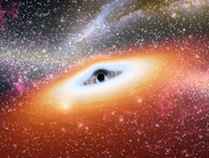 Astronomers are rutinely using spectral measurements to estimate the mass of the central supermassive black hole in order to study black hole growth across cosmic history. Specifically, measures of the gas velocities and the distances of the gas from the black hole are estimated and the virial theorem is applied. However, for some type sources and lower quality data the line width measure FWHM is more uncertain. We will take a closer look at this method by expanding the ways in which the gas velocities are measured in order to investigate if there are more robust gas velocity measures that can be used.
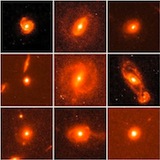 We will use archival images in the optical and infrared of nearby active galactic nuclei and more distant quasars to detect and study their host galaxies. The aim is first to characterize best possible the stellar populations. Thereafter the project can engage in analysis of whether the stellar ages relate to morphological signatures of a potential recent merger or galaxy interaction. Other options are to relate the stellar properties extracted from the imaging with information extracted from spectroscopy so to test how well those two methods trace one another. One option is also to compare the galaxy and stellar properties with estimates of the black hole mass using our own measurements based on spectral analysis. The length of the project determines the amount of data that we'll look at and the depth and scope of the discussion. (15 - 60 ETCS)
 Quasars are powered by supermassive black holes and reside in centers of distant galaxies. We will use spectroscopic data from the Sloan Digital Sky Survey to estimate the mass of the central supermassive black hole that powers active galactic nuclei and quasars. We will extract spectral parameters that characterize the quasar properties (governed by the black hole accretion physics and physics of the central gaseous region) and study how these properties vary with black hole mass. One option is to investigate ways to improve on the black hole mass estimates. We can complement our spectroscopic study with SDSS and HST imaging and also study how quasar properties or black hole mass relates to the host galaxy properties.
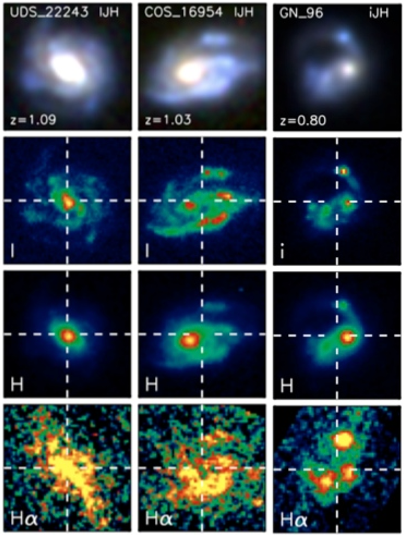 When we look at galaxies as a whole, the birth rate of stars (star formation rate) is happening in a controlled, long lasting fashion. However, when digging inside the internal structure of the galaxies, it appears that there exist pockets of intense star formation triggered either by gas instabilities or by violently merging gas clumps.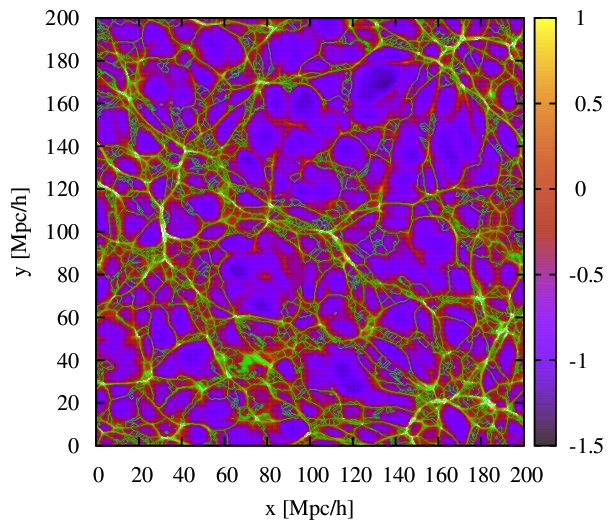
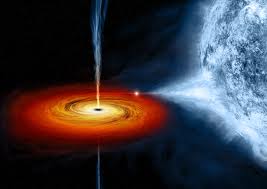 Binary stellar systems are critical in revealing the nature of compact objects. Black holes especially, reveal themselves only when they are member of an X-ray binary (XRB). XRBs are mass-transferring binary systems composed of a compact object accretor and a donor star. They emit radiation in X- rays, when mass is transferred from the donor star onto the accreting compact object. Observational studies of the statistical properties of XRB population in the local Universe show that their total energy output is dominated by the relatively few, most luminous XRBs, also known as ultraluminous X-ray sources (ULXs). ULXs have been suggested to not only play a crucial role in shaping the thermal evolution of the early universe, but also regulating, through their radiative and mechanical energy output, star-formation in dwarf galaxies and massive stellar clusters. As part of this project, we will develop synthetic ULX population models where the crucial ULX phase will be model through detailed binary evolution calculations, avoiding the simplifications of traditional modeling tools, and compare them to the local observed ULX sample.
 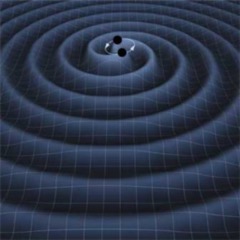 In one of the main proposed formation channels of coalescing binary compact objects, prior to the formation of the second compact object, the binary is expected to go through an ultraluminous X-ray source (ULX) phase. ULXs are a subpopulation of X-ray binaries that population the very high-end of their luminosity distribution. Since ULXs are potential observable progenitor systems of coalescing binary compact objects, the statistical properties of ULX populations and their occurrence rates can be used as a way to distinguish between the different formation channels of binary compact objects. However, one should keep in mind that only a fraction of ULXs will eventually result in a coalescing binary compact object, as some observed ULXs might even be low-mass X-ray binaries. Hence, the observed rate of ULXs by itself cannot pose a robust constraint in the formation rate of coalescing binary COs. As part of this project, we will develop synthetic ULX population models and identify those that are potential progenitors of of coalescing compact objects. Their relative occurrence rates, compared with observational samples of ULXs and GW sources, will allow us to pose constraints on the various proposed formations channels.
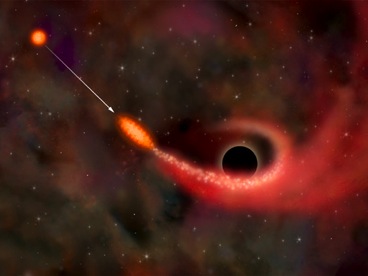 When an unlucky star gets too close to a supermassive black hole, the tidal force from the black hole can deform or even totally destroy the star. This is called a tidal disruption event. The firework illuminates a previously dormant supermassive black hole for about a year. This allows astronomers a chance to detect and understand such black holes which cannot be observed otherwise. This project is for students who are interested in using theoretical modeling to answer fundamental questions like: How do we use tidal disruption events to study the demographics (mass, spin, etc) of supermassive black holes in quiescent galaxies? How is general relativity playing a role in determining the observables? How do accretion disks and jets form under the extreme conditions in a tidal disruption event? The student can also have a chance to get involved in tidal disruption event observations through collaboration with Giorgos Leloudas.
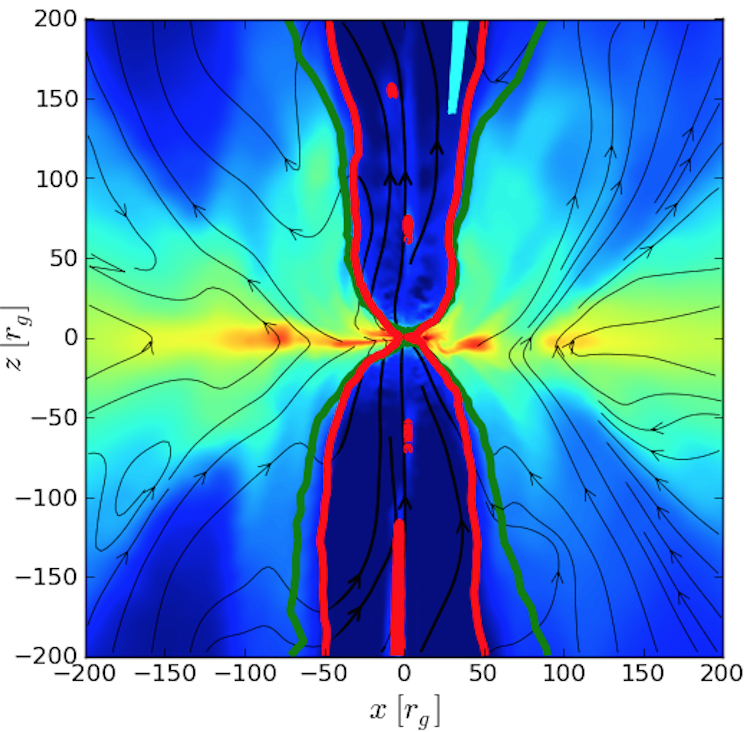 For hundreds of years it is believed that there is a fundamental limit on how fast black holes can digest gas and emit radiation, which is called the Eddington limit. Recently, there are observational evidences that this limit can be broken under extreme conditions such as in a tidal disruption event (a star eaten by a black hole) or for seeds of supermassive black holes in the early universe. I use a comprehensive code (involving general relativity, magnetic fields, gas hydrodynamics, radiation) to study such super-Eddington accretion. The purpose of this project is for the student to learn this code or help analyze the results, in order to understand how black holes can accrete gas so fast and produce the most luminous flares and powerful jets and winds. It is preferred that the students have good computational skills or are very interesting in coding.
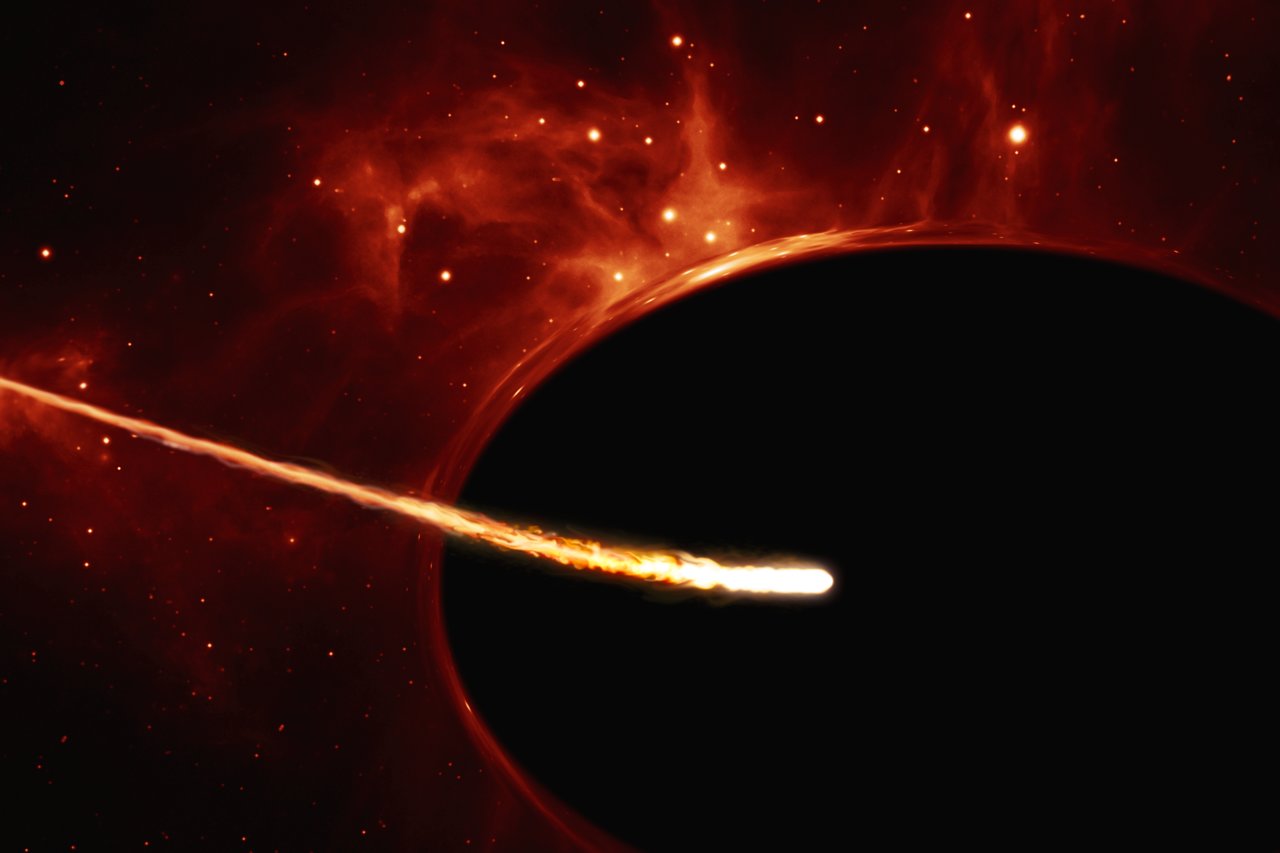 When an unlucky star gets too close to a supermassive black hole, the tidal force from the black hole can deform or even totally destroy the star. This is called a tidal disruption event (TDE). Despite the fact that this phenomenon was already predicted almost 30 years ago, research on TDEs is currently experiencing a boom, mainly due to the recent discovery and follow-up of many such events. This project will use observational data of TDEs, mainly obtained through the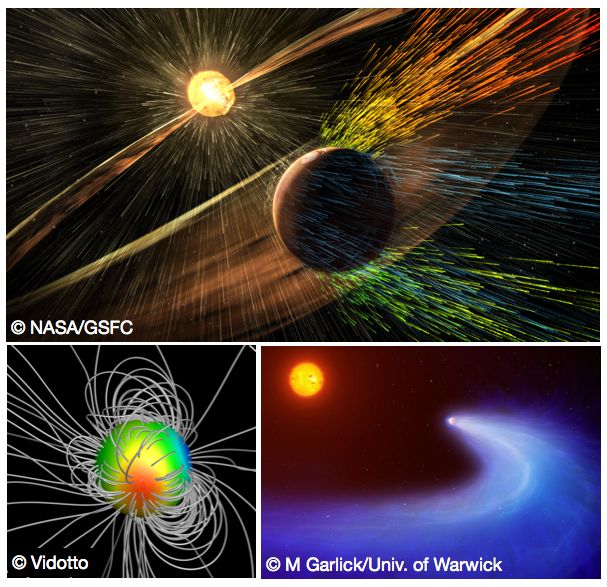
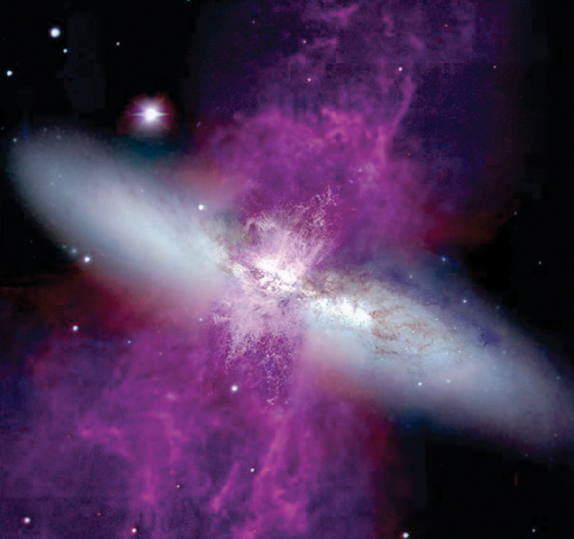 Finding star-forming galaxies in the distant universe has primarily relied on deep images and colour selection to identify the galaxies. Recent observations have found a population of galaxies that have more unusual characteristics in the form of extremely strong emission lines. Such lines may arise in the first star-burst event in the galaxies. This project will use data from the Very Large Telescope to locate these types of galaxies and explore their nature and their role in building up galaxies with cosmic time.
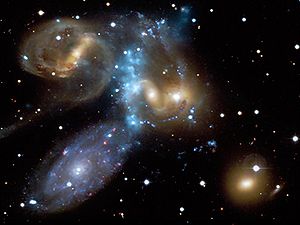 A key disconnect between theory and observation of evolving galaxies at high redshift is that we observe luminous things (a fraction of the baryons) in a galaxy, yet the theory of galactic assembly makes predictions nearly exclusively about the dark matter which dominates the mass in the galactic halo. At low redshift, there are scaling relations between the halo mass and observable quantities such as stellar mass. Using these relations produces a consistent result out to z~4-5, but at z>5 yields a shocking result: it appears that massive galaxies assemble so early that they exist even before gravity has brought their components together! This, of course, is impossible...
 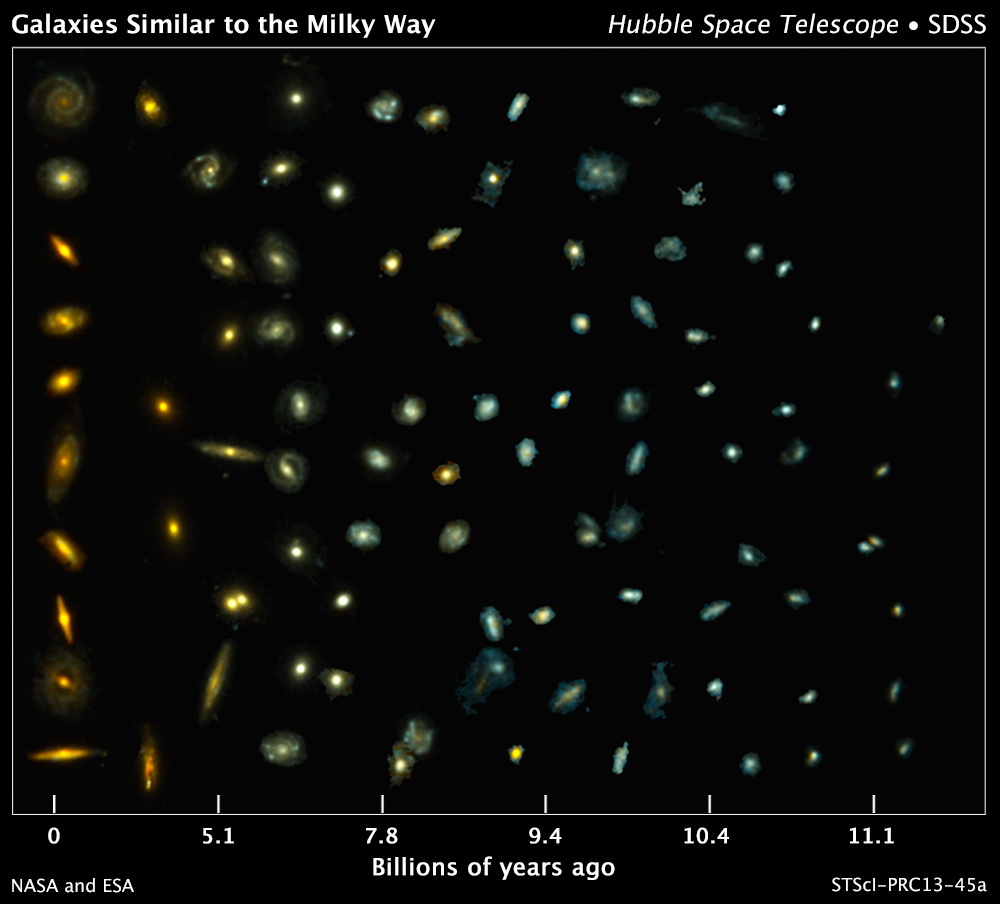 Many different ways of observing galaxies at a variety of stages in their evolution reach the same surprising conclusion: evolving galaxies all look remarkably similar. For example, almost all star-forming galaxies lie on a tight relation between redshift, the existing stellar mass, and their new star-formation rate. Thus, we can predict the star-formation rate quite well from time and mass alone, without having to know anything about the age of the galaxy, its environment, its morphology, or any of the other things that might seem like they should be important. Two projects that could arise from research in this area might be:
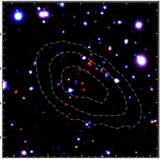 Galaxy clusters are the largest bound structures in the Universe, and are believed to form in its highest density peaks, which is also where the first galaxies form. In the local Universe, galaxies in clusters are observed to be older and more evolved than galaxies in lower density regions.
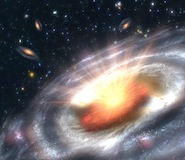 Quasars are powered by supermassive black holes and reside in centers of distant galaxies. The quasar phenomenon is thought to be an early evolutionary phase of galaxies during which stars are forming and the black hole becomes active as it accretes matter.
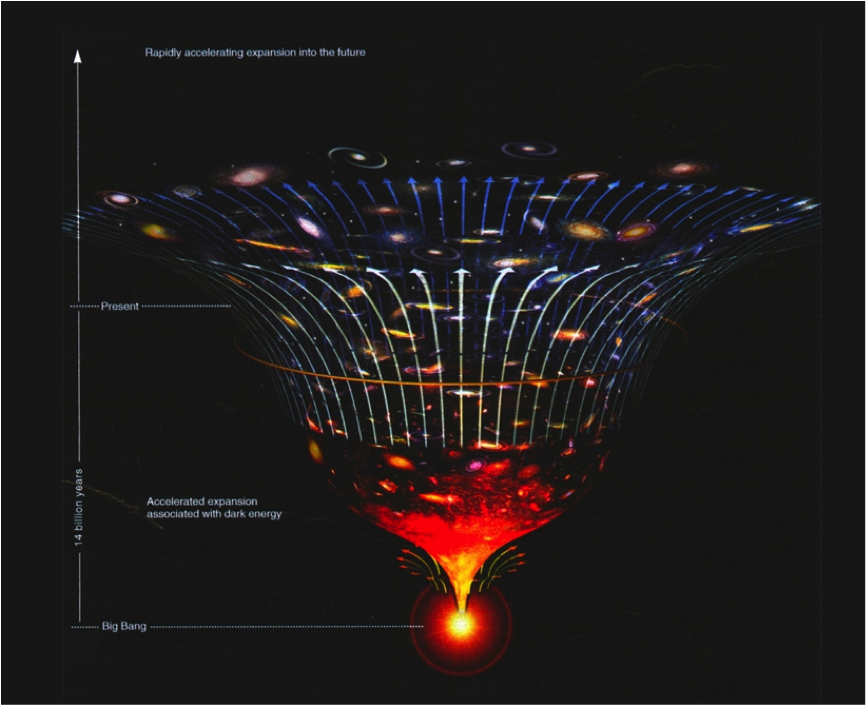 Dark Energy is believed to accelerate the expansion of the Universe. However, the acceleration is almost always measured using supernovae. We want to invent a new method, which does not use “luminosity”, but instead uses “a yard-stick on the sky”. The technique is being developed at DARK these years, and includes finding huge pancakes on the sky.
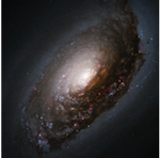 Cosmic dust is ubiquitous in the Universe and distorts our view of distant objects. For example, the interpretation of the light curves of high-redshift supernovae used to infer the existence of dark energy critically depends on correction for dimming by dust. The standard 'extinction law' is based on observations of stars in the Milky Way and is purely empirical. This project aims to derive a new parametrization of the extinction law based on (1) devising a new physical parametrization of the Milky Way extinction law and (2) extending the law to other galaxies and higher redshift. The new law will be used to address the nature of the famous 2175 Å feature and the consequences for what we can infer from dark energy based on distant supernovae.
 There are very few female lecturers and professors at NBI and in the natural or technical sciences in general. This is despite a recruiting pool of about 30 % women at the PhD level. The dramatic decrease in female scientists as a function of seniority is known as the 'leaking pipeline'. The effect is sometimes attributed to a combination of women's lack of competitiveness and personal choice as they get kids and prioritize differently. However, a recent study (Watson, Andersen & Hjorth, Nature 436, 174, 2005) shows exactly the same effect occurring over just a few months resulting from small biases in a series of selections of applicants for the European Young Investigator Awards. The purpose of this project is to create a physical model capturing the main effects of a multidimensional set of skills required for selection, a suitable dispersion in these, small selection biases leading to a leaking pipeline. Armed with this model one can address the causes of gender bias in academia, business, and government.
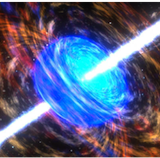 Gamma-ray bursts occur in violently star-forming galaxies, generally at high redshift. Such galaxies can be used to map the star formation in the universe and the fundamental routes to galaxy formation and build-up. This project aims to exploit a huge data set of GRB host galaxies gathered in Copenhagen, the most comprehensive and statistically available worldwide. Scientific questions that can be addressed are: What is the redshift distribution of GRBs and how does this relate to the star formation history of the universe? What is the fraction of obscured star formation in the universe? What is the relation between GRB host galaxies and other populations of high-redshift galaxies such as Lyman-alpha emitters and Lyman break galaxies? What are the ages and dust content of individual galaxies?
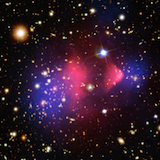 Massive clusters of galaxies at intermediate redshifts act as gravitational lenses of background galaxies. The locations of the multiply imaged arcs depend on the dark-matter distribution in the cluster and the cosmological parameters, notably the matter and dark-energy density parameters. Ideally, an extremely deep Hubble Space Telescope image of the most spectacular cluster lens can constrain both at unprecedented accuracy. The project will involve modeling of HST and Chandra X-ray observatory, and VLT/X-shooter data on massive clusters.
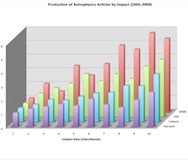 Quantifying scientific productivity (quality, quantity, impact, etc.) is becoming more and more important. A relatively new academic discipline "scienometrics" is gaining momentum while politicians and science administrators are implementing various measures supposed to be 'simple' and operation, e.g., for distributing funding. This project aims to study current ideas in the field and will address the issue from both the scienometrics point of view and the administrator point of view. The purpose of the project is to help define useful criteria and measures and at the same time help scientists define their 'bottom line'.